FOUND WILDLIFE
FOLLOW THE
STEPS BELOW
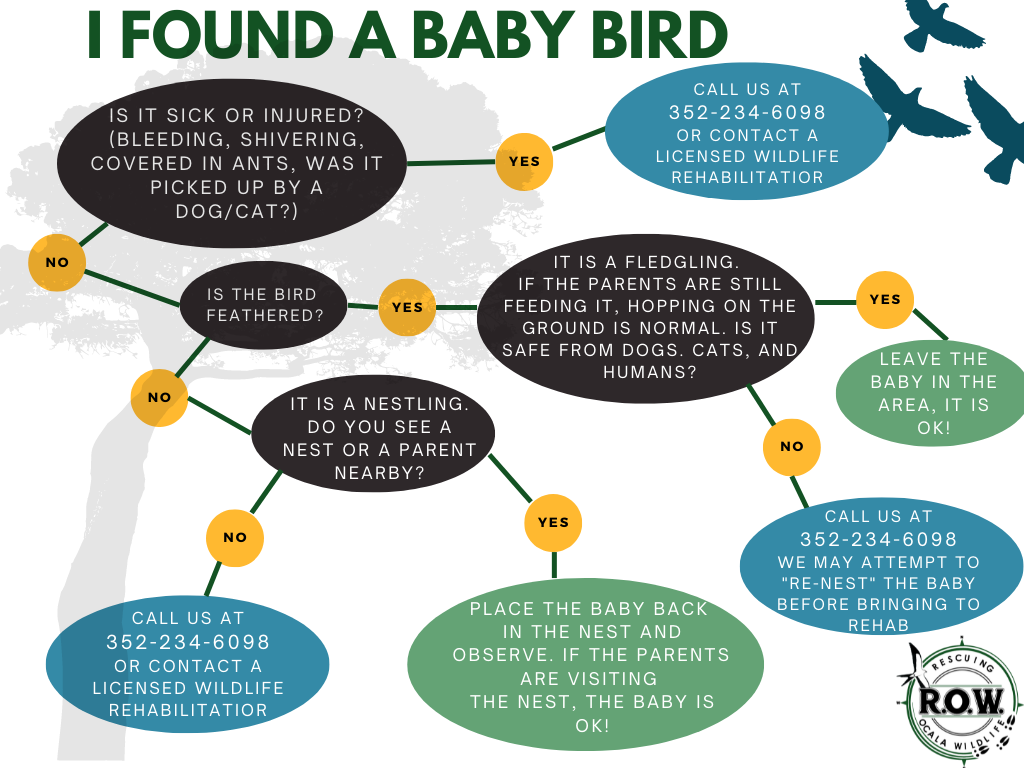
- Determine if this animal needs help. Did you see an accident/injury occur? Is there obvious bleeding or a broken bone? Did a cat or dog have the animal in its mouth? Are you able to approach the animal with no reaction? Are there ants, maggots, or other insects, visible on the animal? Is it a baby sitting near a dead parent or vocalizing for hours on end? If you answered yes to any of these, the animal needs help!
- Take a photo of the animal that clearly shows the injuries.
- TEXT the photo to us at 352-234-6098 and include when you found the animal, a brief description of what may have happened to the animal, your current location, and if you have transportation.
- Contain the animal if it is safe to do so. Follow the instructions below on how to safely contain wildlife. Do not attempt to handle rabies vector species* including raccoons, bats, foxes, skunks, or coyotes.
- DO NOT give any food, water, or medical treatment. Not only is this illegal, but it is extremely dangerous for you and the animal that you are trying to save.
- Stay calm, and be patient! We are all volunteers, and are caring for other animals while also answering hundreds of messages a day. We will return your message as soon as possible.
*Please note, any mammal can carry rabies!
We are open from 9am-4pm Monday-Saturday.
Rescuing Ocala Wildlife is entirely volunteer-run and is NOT a 24 hour facility!
If you find wildlife outside of our operating hours you can use www.AHNow.org to search for another licensed rehabber near you, or you can contact your county's animal services, the Florida Fish and Wildlife Conservation Commission, or the University of Florida Small Animal Hospital.
Until you reach a rehabber, keep the animal contained in a warm, dark, quiet location away from humans, especially small children, and domestic pets. Do not give it any food or water.
Containing an Animal
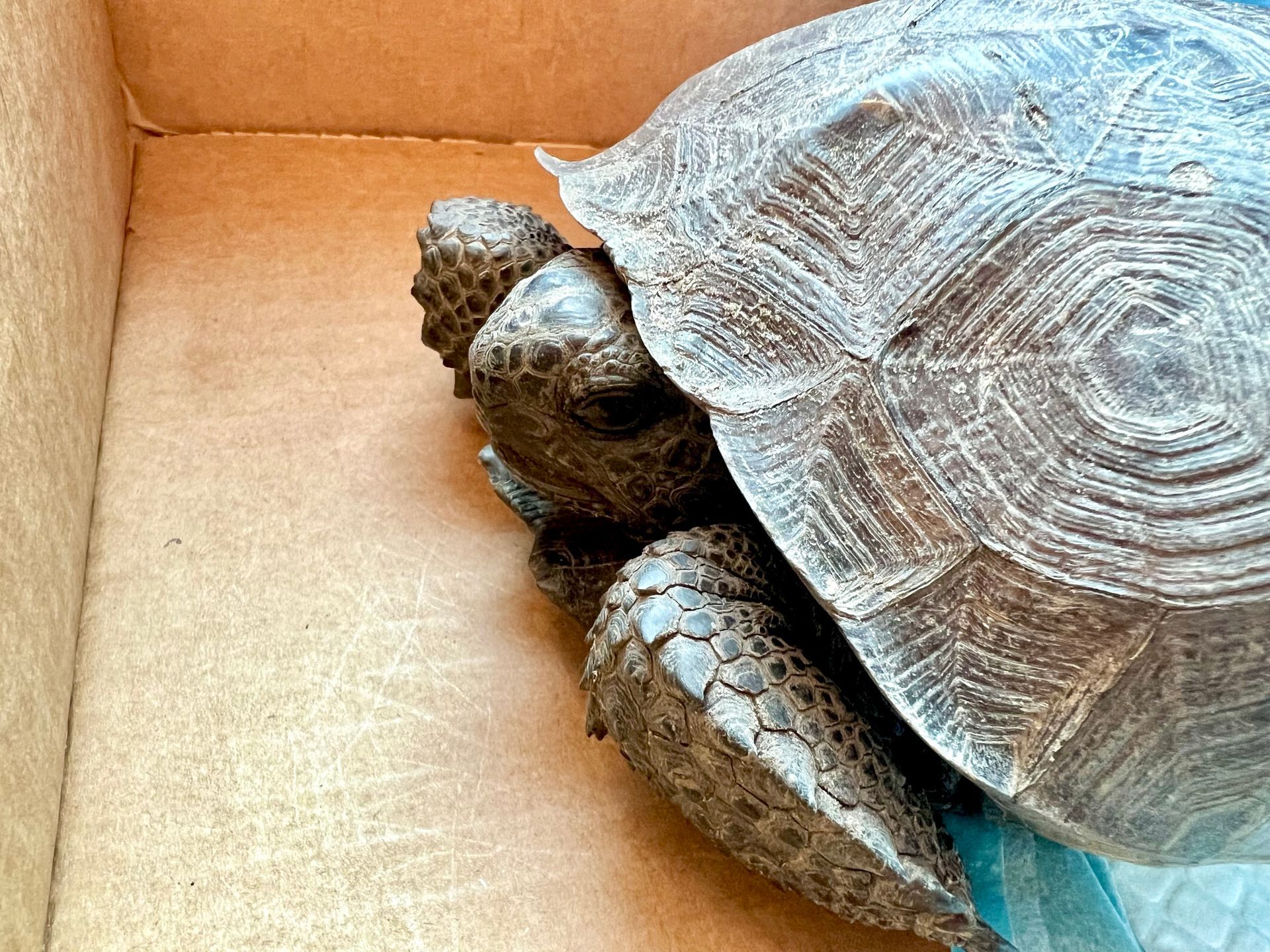
To safely contain birds, turtles/tortoises, and other small animals, it is best to use a cardboard box. To minimize stress and risk of injury, cover animals with a sheet, blanket, or even a t-shirt or jacket during the capture process. Wear gloves or wash hands immediately after touching any wild animal. Please note that you should not attempt to handle animals that are known carriers of rabies, such as raccoons, bats, foxes, skunks, or coyotes.
Make sure that the cardboard box has proper ventilation with air holes. Boxes are preferable to wire crates or cat carriers as they reduce the risk of injury, such as feathers or claws getting caught. It is important not to offer any food or water to the animal, even if you think it may be dehydrated or extremely hungry. Force-feeding or giving water through a dropper can result in aspiration pneumonia or even death, and an incorrect diet can cause GI upset. These complications can occur from even one feeding, and cost the animal you are trying to save their life. Even newborn animals will be ok until they can get to professional help so long as they are kept warm, so please reach out as soon as possible and only keep the animal warm and contained; not fed!
Find a quiet and dark place in your home, away from loud noises and other animals, to place the box. Even if the animal seems receptive to being petted or held, it is likely due to weakness or injury rather than a normal behavior, and being handled can be stressful for them. The best course of action is to leave them alone until help arrives, as this will be most beneficial to their well-being.
Reach out to us via
text at
352-234-6098 and include...
- A photo of the animal clearly showing any injuries
- When you found the animal
- A brief description of what may have happened to the animal
- Your location, and if you have transportation
We are open from 9am-4pm Monday-Saturday and will return your message as soon as possible. Please stay calm and know that our volunteers are working tirelessly to save wild lives while also juggling hundreds of messages a day!